bagging machine
A bagging machine, often confused with a bag making machine, is a distinct category of equipment designed primarily for filling pre-made or formed bags with a product and then sealing them. While a bag making machine creates the bag from film, a bagging machine takes empty bags – either from a roll (form-fill-seal) or pre-formed stack – opens them, fills them with the product, and applies a closure such as heat seal, adhesive, or clip. Bagging machines are critical in automated packaging lines for industries ranging from fresh produce and frozen food to hardware parts and pet food. They significantly increase packaging speed, improve portion accuracy, and reduce labor costs compared to manual filling operations. Modern bagging machines are fully integrated with weighing systems, conveyors, and labeling units to create a seamless packaging workflow from product input to packed bag output.
The operational mechanism of a bagging machine depends on whether it uses a form-fill-seal (FFS) method or pre-formed bag filling. In vertical form-fill-seal (VFFS) bagging machines, flat film is drawn from a roll, formed into a tube around a filling collar, and vertical and horizontal seals are made to create a continuous chain of bags. The product is dropped through the filling tube into the open bag, then the next seal is made to close the bag and separate it from the film. Horizontal form-fill-seal (HFFS) machines operate similarly but on a horizontal plane, often used for solid items like granola bars and hardware. For pre-made bag bagging machines, a magazine holds stacked flat bags; a suction cup picks a bag, opens it, and places it on filling spouts where the product is loaded, followed by a sealing station. This method is more versatile for heavy or irregularly shaped items that cannot be dropped vertically without damage.
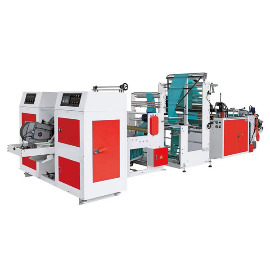
Plastic Bag Making Machine
Key technical parameters for bagging machines are centered on fill speed, bag size capacity, and accuracy. Fill speeds range from 20 bags per minute for large, heavy industrial sacks up to 120 bags per minute for small consumer-sized bags. Bag width capacity varies from 50 mm for sample sachets up to 500 mm for bulk feed sacks. Fill weight capacity extends from a few grams for spices to 50 kilograms for cement or fertilizer. Accuracy is governed by the integrated weighing system, which can be a net weigh scale (weighing product before filling) or gross weigh scale (weighing product and bag together), with modern systems achieving ±1-2 grams for fine products. Sealing mechanisms include heat sealing for plastic bags, ultrasonic sealing for sensitive films, and impulse sealing for high-speed lines. The control system is typically a PLC with a touchscreen interface, allowing recipe management for different products and bag sizes, enabling rapid changeovers that are essential for co-packers handling multiple SKUs.
Different types of bagging machines cater to specific product characteristics and packaging formats. The vertical form-fill-seal
bagging machine is the most popular for granular and powdered products like sugar, flour, rice, and pet food, offering high speeds and low film waste. The horizontal form-fill-seal bagging machine is preferred for solid, rigid, or fragile items such as cookies, hardware parts, and electronic components, as the horizontal orientation reduces breakage. The premade open-mouth bagging machine is used for heavy bulk products like cement, animal feed, and agricultural seeds, where the bag needs to be manually or automatically placed on fill spouts. The pillow bagging machine produces a pillow-shaped bag with a back seal, commonly used for snacks and confectionery. The sachet bagging machine produces very small, single-serving packages for condiments, samples, and medical doses, operating at extremely high speeds up to 300 units per minute. Each type has unique mechanical and control features, making selection highly application-specific.
Applications of bagging machines are pervasive across consumer and industrial packaging sectors. In the food industry, bagging machines package everything from fresh fruits and vegetables (using breathable film) to frozen fish and poultry, deli meats, and dry snacks, with strict compliance to food safety standards and washdown-capable designs. The agricultural sector uses bagging machines for seeds, fertilizers, pesticides, and animal feed, often in harsh outdoor or semi-outdoor environments that require weather-resistant enclosures. Chemical and pharmaceutical industries employ bagging machines with explosion-proof ratings and sterile environments for powders, granules, and tablets, featuring dust extraction systems and cleanroom compatibility. E-commerce and retail distribution centers use bagging machines for poly mailers and bubble-lined bags for shipping clothing, books, and small electronics, integrating with weighing and label printing systems for automated shipping. Industrial hardware and automotive sectors bag small parts, fasteners, and fittings, using machines with high durability and ability to handle abrasive or greasy products without frequent maintenance.
Selecting the right bagging machine involves analyzing product flow properties, bag specifications, and production targets. For free-flowing products like granulated sugar, a VFFS machine with a volumetric cup filler works efficiently, but for sticky or cohesive products like coffee grounds, a vibratory feeder or auger filler is required. Bag dimensions and material must be matched to the machine's forming collar or bag handling system; for instance, thick woven polypropylene sacks require heavy-duty grippers and sealing bars. Evaluate the required sanitation level – food-grade machines must have 304 stainless steel contact parts and easy-to-clean surfaces. Consider the available floor space and height clearance, especially for VFFS machines that require overhead room for film roll loading. Assess the integration capabilities with upstream equipment like checkweighers, metal detectors, and downstream case packers to ensure a balanced packaging line. Lastly, request a demonstration with your actual product to verify fill accuracy, seal strength, and overall machine performance before purchase, as product characteristics significantly influence bagging machine effectiveness.
Maintenance and troubleshooting for bagging machines focus on sealing integrity, film handling, and weighing accuracy. Operators should regularly clean the sealing jaws to remove film residue and check the thermocouples and heating elements for proper operation, as inconsistent temperatures are the primary cause of weak seals. Film tension and tracking adjustments should be performed weekly to prevent film wrinkling or misalignment, which causes bag skewing and jams. The weighing system requires periodic calibration using standard weights to maintain accuracy, and load cells should be checked for wear or damage from overloading. Pneumatic systems, including air cylinders and filters, need regular draining and inspection to ensure consistent pressure and actuation. Developing a comprehensive preventative maintenance schedule based on machine running hours and environmental conditions will reduce unscheduled downtime. Additionally, keeping a stock of critical spare parts such as sealing belts, heating elements, and photo-eye sensors ensures rapid repair in case of failure, maintaining the high uptime required for cost-effective packaging operations.