hydraulic bag making machine
A hydraulic bag making machine utilizes hydraulic fluid power to actuate its main functions – particularly sealing and cutting – rather than pneumatic or purely mechanical drives. This design delivers exceptionally high force (typically 10-50 tons) that is crucial for processing thick films, multi-layer laminates, woven fabrics, and heavily reinforced materials that are common in industrial sacks, construction bags, and heavy-duty shipping covers. Hydraulic systems provide smooth, controlled motion with precise force regulation, enabling consistent seals even when film thickness varies. They are also known for their ruggedness and ability to operate continuously under heavy loads, making them a preferred choice in harsh industrial environments where reliability and power are paramount.
The working principle of a hydraulic bag making machine centers on a hydraulic power unit that pressurizes oil, which is then directed to cylinders that actuate the sealing and cutting mechanisms. Unlike pneumatic cylinders that rely on compressible air, hydraulic cylinders provide incompressible fluid power, delivering uniform force regardless of load changes. The sealing jaws can be pressed with up to 50 tons of force, ensuring that thick films – up to 300 microns or more – are fused completely without gaps or weak spots. The cutting blade, also hydraulically actuated, can slice through multiple film layers or reinforced woven materials with a clean edge, reducing burrs and improving bag appearance. The hydraulic system includes a pump, reservoir, filters, accumulators, and proportional valves for speed and pressure control, all integrated with the machine's PLC. Advanced machines feature closed-loop pressure control that adjusts force in real-time based on film feedback, maintaining optimal sealing quality even as material properties change.
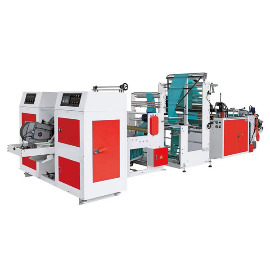
Plastic Bag Making Machine
Key technical specifications for hydraulic bag making machines include maximum sealing force, cycle time, and film thickness capacity. Sealing force typically ranges from 10 to 50 tons, with higher forces required for wider sealing jaws (up to 1600 mm) or thicker films. Cycle time, including sealing, cooling, and cutting, is generally slower than pneumatic or servo machines – around 20-40 cycles per minute – due to the time needed for hydraulic fluid to build pressure and release. Film thickness capacity can extend to 300 microns for standard bags and up to 500 microns for custom heavy-duty sacks. The hydraulic pressure is set between 100 to 250 bar, with flow rates up to 100 liters per minute for large cylinders. The machine's frame must be reinforced to withstand these high forces, often using heavy-gauge steel with cross-bracing. Heat dissipation is critical; hydraulic oil temperature must be maintained below 60°C using oil coolers, as excessive heat degrades the oil and reduces component life.
There are several configurations of hydraulic bag making machines tailored to specific heavy-duty applications. The hydraulic bottom-seal sack machine is the most common, featuring a large hydraulic cylinder that presses the sealing jaws against the film with high force, followed by a hydraulic guillotine cutter that slices the sack to length. The hydraulic side-seal machine is used for producing heavy gusseted bags, with hydraulic cylinders actuating both the side seal and the gusset folding mechanism simultaneously. The hydraulic die-cutting bag machine incorporates a hydraulic press that punches handles or custom shapes into thick films, eliminating the need for separate punching equipment. Some models combine hydraulic actuation with servo-driven film feed, providing the force of hydraulics with the precision of servo control – a hybrid design that excels in heavy-duty performance. For woven polypropylene sack production, the hydraulic machine is often integrated with a hot-air sealing system, where the hydraulic cylinders press the woven layers together while hot air melts the coating, creating an exceptionally strong bond.
Applications of
hydraulic bag making machines are concentrated in industries where bag strength and durability are non-negotiable. The cement and construction industry uses these machines to produce sacks that must withstand rough handling, high drop impacts, and heavy loads of 25-50 kg. Agricultural chemical producers rely on hydraulic machines for fertilizer and pesticide bags, which require resistance to puncture and moisture, often with multi-layer laminates. Animal feed manufacturing uses heavy-duty sacks that are palletized and shipped over long distances, where consistent seal strength prevents costly spillage. Mining and minerals processing use hydraulic bag making machines for ore samples and concentrate bags, where the bags must be robust enough to handle sharp-edged materials. Even the military and defense sector uses hydraulic bag machines for tactical packaging and sandbag production, where reliability in extreme conditions is essential. The high force capability of hydraulic machines makes them the only viable option for these demanding applications.
Selecting a hydraulic bag making machine requires a careful assessment of force requirements, production speed, and maintenance infrastructure. First, calculate the needed sealing force by considering the film thickness, width, and material type – generally, thicker and wider films require more force; use the formula: Force (N) = seal width (mm) × film thickness (mm) × material-specific constant (typically 10-20 N/mm²). Choose a machine with a force rating at least 20% higher than the calculated value to allow for safety margin. Production speed is inherently lower than pneumatic machines, so ensure your required output aligns with the machine's cycle rate; consider running multiple machines in parallel if needed. Evaluate the hydraulic system's cooling capacity – water-cooled or air-cooled oil coolers must be sized to handle the heat generated at your planned duty cycle. Check the availability of hydraulic oil, filters, and seals in your region, as these consumables require frequent replacement. Also, consider the noise level – hydraulic power units can be loud (80-90 dB), so plan for noise enclosures or separate pump rooms. Finally, ensure that your facility has adequate floor strength and anchoring points for the heavy machine base.
Maintenance of a hydraulic bag making machine is more involved than for pneumatic or servo machines, due to the complexity of the hydraulic circuit. Daily, check the hydraulic oil level, inspect hoses and fittings for leaks, and observe the oil temperature gauge. Weekly, drain water from the oil reservoir (if equipped with a water separator) and clean the intake strainers. Monthly, replace the return-line filter elements and check the pressure relief valve setting. Every 500 operating hours, sample the hydraulic oil for contamination and acid number; replace the oil if it shows degradation. Inspect the cylinder seals for leaks and replace them as needed, as seal failure leads to pressure loss and erratic operation. Keep spare seal kits, filter elements, and hoses in stock to minimize downtime. Ensure that all hydraulic components are properly grounded to prevent static electricity buildup, which can cause fires when flammable materials are present. Train maintenance staff on safe hydraulic practices, including lockout-tagout and pressure bleed-off procedures before any servicing. By adhering to a stringent maintenance regimen, a hydraulic bag making machine can provide decades of reliable heavy-duty service, justifying its higher initial cost through long-term durability and consistent output.