non woven bag making machine
A non woven bag making machine is a specialized production system designed to manufacture bags from nonwoven fabric, a material made from bonded polypropylene or polyester fibers that is durable, lightweight, and reusable. Unlike plastic film bag machines that rely on heat sealing, nonwoven bag machines use ultrasonic welding or sewing to bond the fabric layers, and often incorporate handle attachment, cutting, and folding stations. These machines produce the reusable shopping bags that have become increasingly popular as an alternative to single-use plastic bags in many regions. Nonwoven bags are valued for their strength, soft feel, printability, and eco-friendly image, even though they are still plastic-based. The machines typically operate at slower speeds than film bag makers – 30 to 80 bags per minute – due to the heavier material and the mechanical complexity of attaching handles. They are available in semi-automatic and fully automatic configurations, with the latter including handle feeding, welding, and stacking in one continuous line.
The operational sequence of a non woven bag making machine starts with a roll of nonwoven fabric (usually spunbond polypropylene with weight 60-120 gsm). The fabric is unwound and fed through a folding station that creates the bag shape – often a U-fold or gusset fold for the sides. Next, the fabric passes through a welding station, where ultrasonic or heated rollers bond the side seams and bottom. Ultrasonic welding is preferred because it creates strong, clean bonds without burning or stiffening the fabric. After welding, the bag body moves to the handle attachment station, where pre-cut handle loops (made from the same or heavier fabric) are fed from a roll or magazine, positioned over the bag opening, and welded onto the bag body. Some machines use a separate handle welding head that applies pressure and ultrasonic energy to attach the handles. The finished bag is then cut to length and transferred to a stacking unit. For printed nonwoven bags, the machine may include an inline flexographic printer before the folding section.
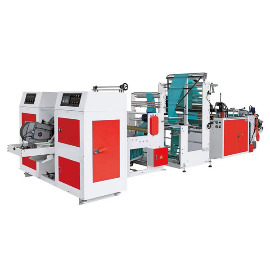
Plastic Bag Making Machine
Key technical specifications for non woven bag making machines include bag width (200-600 mm), bag length (300-800 mm), gusset depth (up to 150 mm), fabric weight (60-150 gsm), handle length (400-600 mm), handle width (20-50 mm), production speed (30-80 BPM). Ultrasonic welding frequency is typically 20 kHz or 35 kHz, with power ratings of 3-10 kW. The machine requires compressed air at 6 bar for pneumatic actuators. Power consumption is 10-30 kW, depending on the number of ultrasonic generators and heating elements. The stacking unit can hold 100-300 bags per stack. Optional features include a printing unit, a fold-in-half device for retail display, and a handle twist unit that twists the handle loops for easier carrying. The machine's construction uses aluminum and stainless steel for corrosion resistance, as the fabric generates dust.
non woven bag making machines are predominantly used for reusable shopping bags distributed by supermarkets, retail chains, and promotional companies. These bags are often printed with store logos and environmental messages. They are also used for trade show giveaways, conference bags, and promotional merchandise. In some countries, nonwoven bags are mandated as alternatives to plastic bags, driving demand for these machines. The hospitality industry uses nonwoven bags for laundry and amenity kits. With the growing emphasis on sustainability, manufacturers are exploring nonwoven fabrics made from recycled PET fibers or biobased polymers, which require similar machine settings but may need modifications to ultrasonic welding parameters to accommodate different melting points.
Selecting a non woven bag making machine involves deciding between in-line handle attachment vs. separate handle making. Fully automatic machines with integrated handle welding offer higher productivity and consistency but cost more. Evaluate the handle design – some machines can attach handles in a U-shape or V-shape, and can accommodate different handle widths. Consider the fabric weight range; heavier fabrics (120+ gsm) may require more powerful ultrasonic generators. If you produce printed bags, ensure the printing registration system is accurate, as fabric can stretch more than film. Production speed is moderate; if you need higher output, consider a machine with multiple lanes or a twin-head handle welder. Changeover time for different bag sizes should be assessed; look for machines with adjustable folding plates and quick-change handle guides. Also, verify the machine's dust extraction system, as nonwoven fabric generates fiber particles that can affect electronics and operator health.
Maintenance of a non woven bag making machine focuses on the ultrasonic welding components and handle attachment section. The ultrasonic horns and anvils must be kept clean and free of fabric residue; clean them daily with a soft cloth and approved solvent. The horns should be inspected weekly for cracks or wear, as they are precision components. The handle feeding system requires regular cleaning to prevent jams; check the handle roll guides and cutters daily. Lubricate all bearings and cam followers weekly. The cutting blade should be sharpened monthly to ensure clean fabric cuts without fraying. Calibrate the ultrasonic generator's frequency and power output monthly using a testing device. The folding plates must be aligned precisely to prevent bag skewing; check alignment weekly. Because nonwoven machines have many mechanical moving parts, implement a monthly inspection of all belts, chains, and gearboxes. Keep spare horns and anvils in stock, as these are the most frequently replaced components. By maintaining high standards in the welding and handle sections, a non woven bag making machine can produce durable, aesthetically pleasing reusable bags that meet the quality expectations of eco-conscious retailers and consumers.