woven bag making machine
A woven bag making machine is a specialized production system designed to manufacture bags from woven polypropylene (PP) or polyethylene (PE) fabric, which is known for its exceptional strength, tear resistance, and durability. These bags are widely used in agriculture, construction, chemicals, and food industries for packaging bulk commodities like cement, fertilizer, grains, and animal feed. Woven bag making machines typically include sections for fabric unwinding, cutting, sealing (by heat or stitching), bottom forming, and sometimes lamination or printing. The fabric is produced on a circular loom or flat loom, then wound into rolls. The bag making machine converts these rolls into finished sacks with either open mouths or valve closures. Speeds are generally low, around 20 to 50 bags per minute, due to the heavy material and the mechanical operations required. These machines are ruggedly built to handle the abrasive nature of woven fabric and the demands of 24/7 industrial production.
The operational sequence of a woven bag making machine starts with fabric unwinding from large rolls (up to 1200 mm wide). The fabric passes through a tension control system and then enters a cutting station where it is cut to the required sack length. For heat-sealable woven fabric (coated with PE), the cut pieces are folded and passed through heated sealing bars that melt the coating and bond the fabric layers to form the bottom seal. For uncoated woven fabric, the bottom is closed by a stitching station using heavy-duty sewing heads that apply a double-stitch closure. For valve sacks, a valve insertion module inserts a paper or plastic valve into the bottom corner, allowing easy filling. After sealing or stitching, the sacks are stacked, compressed, and counted. Some machines include an inline laminating unit that applies a PE film to the fabric for moisture barrier, or a flexo printer for branding. The control system is a rugged PLC with a simple interface for setting length, sealing temperature, and stitch density.
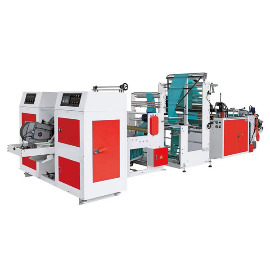
Plastic Bag Making Machine
Key technical specifications for woven bag making machines include sack width (300-800 mm, up to 1200 mm for industrial), sack length (500-1200 mm), fabric weight (80-150 gsm), production speed (20-50 BPM for heat seal, 15-30 BPM for stitching). Sealing temperature for coated fabric is 180-300°C, with sealing pressure of 5-15 bar. Stitching machines use heavy-duty needles with thread tensioners, operating at 800-1500 stitches per minute. Power consumption is 20-50 kW, and compressed air is needed for pneumatic actuators. The stacking unit can handle 20-100 sacks per stack. Optional features include a gusset former for side gussets, a block bottom former for square-bottom sacks, and an automatic conveying system to palletize finished sacks. The machine frames are heavy steel with vibration damping.
woven bag making machines are essential for packaging agricultural products such as rice, wheat, maize, and pulses, where breathability and strength are required. The construction industry uses them for cement, sand, and gravel sacks. Chemical companies package fertilizers, resins, and plastic pellets in woven bags. Animal feed manufacturers use them for pellets and meal. The mining sector uses them for mineral concentrates. With the growing demand for sustainable packaging, some woven bag machines are adapted to handle jute or cotton woven fabrics, though these are less common due to cost. The trend towards lightweighting has led to thinner, high-tenacity woven fabrics, which require precise tension control to avoid breakage during processing.
Selecting a woven bag making machine requires determining the closure type (heat seal vs. stitch), fabric type (coated or uncoated), and sack design (open mouth or valve). For coated fabric, a heat seal machine is faster and produces a more airtight seal, ideal for moisture-sensitive products. For uncoated fabric, a stitching machine is cheaper but slower and requires thread consumption. If you need valve sacks for automatic filling, choose a machine with a reliable valve insertion module. Consider the fabric's width and weight; machines are adjustable but have ranges. Production speed is relatively low; if you need high output, consider multiple machines or a dual-line system. The machine's cutting accuracy is critical for consistent bag length; servo-driven cutters are preferred. Also, evaluate the machine's ability to handle recycled woven fabric, which may have uneven thickness and require adaptive tension control.
Maintenance of a woven bag making machine is demanding due to the abrasive fabric and high mechanical loads. The cutting blade must be sharpened or replaced regularly (every 500,000 cuts) to prevent frayed edges. For heat seal machines, the sealing bars must be cleaned daily to remove melted polymer residue; use brass scrapers. For stitching machines, the needles and loopers must be inspected and replaced every 2-3 shifts, as they wear quickly against the abrasive fabric. Lubricate all sewing machine moving parts with high-speed oil every shift. Check the tension of all belts and chains weekly. For valve insertion modules, clean the adhesive applicators daily. Monthly, calibrate the temperature sensors and pressure gauges. The stacking conveyor requires regular cleaning to prevent fabric dust buildup. Keep a comprehensive stock of spare blades, needles, sealing bar coverings, and thread. Because woven bag machines often run in dusty environments, ensure all electrical panels are sealed and that cooling fans have filters. By maintaining a rigorous schedule, a woven bag making machine can produce strong, durable sacks that reliably contain heavy commodities, making it a cornerstone of industrial packaging.